Remove Drivers From Device Manager Windows 7
- Usb Device Drivers Windows 7
- Start Device Manager Windows 7
- Remove Drivers From Device Manager Windows 7
How Devices and Driver Packages are Uninstalled.; 2 minutes to read; In this article. This section provides an overview of what you need to do to uninstall a device and driver package. Perform these actions by running one of the following: Device Manager. A device installation application that calls the SetupAPI and device.
Hello,
Thank you for posting your query on Microsoft Community forum.
As per the issue description and screen shot which you have provided it seems that while updating the drivers for your android device you receive the error message shown in the screen shot.
Soda mein whiskey tu mp3 download. Boo Mein Ta Dargi Ringtone Mr Jatt Song HD Download Diljit Dosanjh sardar Ji Boooo M Ta Dargi, filetype:mp3 Lyrics Whiskey Di Botalofficial Musica Preet Hundal Jasmine Sandlas Latest Songs 2018 Audio. Video Whiskey Di Botalofficial Musica Preet Hundal Jasmine Sandlas Latest Songs 2018 Gratis Download Whiskey Di Botalofficial Musica Preet Hundal Jasmine Sandlas Latest Songs 2018 Fast. Sep 18, 2017 Soda mein visky tu dj Fakhar. Unsubscribe from dj Fakhar? Soda Mein Whiskey; Artist Rishi Singh & Coolequal; Album Desi - Rishi Singh; Licensed to YouTube. Download Main Khiladi Tu Anari (Club Mix) DJ NKD DJ Neo Mp3 Song by in 190kbs & 320Kbps only on Pagalworld. From New Music Album 'Elecktrotion 3 DJ Sanjay DJ Veeru (2012)'. Free Download or listen online - in HD High Quality Audio. Combatting Heavy Equipment Theft. (no year is specified in PIN number). Komatsu Serial Number Location Models PC05 PC12R PC15R PC20. Serial number location for.
What is the make and model of your computer?
Which Android device you are referring to?
If you have this device still connected to the computer, then I would suggest you to remove it by disconnecting it manually from the computer and then try uninstalling its drivers from the Device Manager. Try these methods and check if that helps.
Please try the steps provided to uninstall the Android device from Device Manager, uninstall the device drivers from program list and then download the latest drivers from the manufacturer's website.
Step 1:
Uninstall the Device from Device Manager
- Open Device Manager
- Expand the Network Adapter section.
- Find the Android device driver.
- Right click Android device driver and select Uninstall.
- Select the check box delete the driver software for this device.
- Reboot the computer after uninstall process has finished.
Step 2:

Uninstall the Device Drivers from Program List in Control Panel
- Click on start, select Control Panel
- Now click on Programs and select Programs and Features.
- Find the Android device driver
- Right click Android device driverand select Uninstall.
- Reboot the computer after the uninstall process has finished.
Step 3:
Download and install the latest drivers for the Android device from the manufacturer website
If issue persist I would suggest you to try the steps provided below and see if it brings any difference.
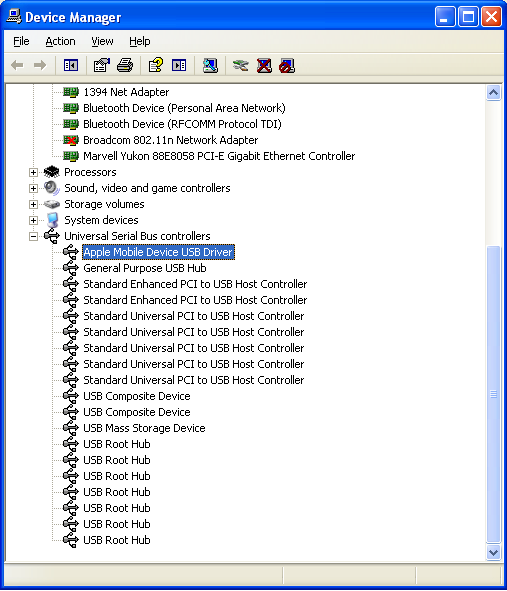
Remove and reinstall all USB controllers.
- Open Device Manager by clicking the Start button, clicking Control Panel, clicking System and Security, and then, under System,clicking Device Manager. If you're prompted for an administrator password or confirmation, type the password or provide confirmation.
- In the list of hardware categories, find and expand Universal Serial Bus controllers.
- Right-click every device under the Universal Serial Bus controllers node, and then click Uninstall to remove them one at a time.
- Restart the computer, and let the USB controllers get reinstalled.
- Plug in the removable USB device, and then test to make sure that the issue is resolved.
Hope this would help. If issue still persists post back with current status of your computer and result of proposed suggestion, we will be happy to assist you.
Regards,
There are plenty of reasons you might need to open Device Manager in Windows but usually it's to troubleshoot some kind of problem with your computer's hardware.
It doesn't matter if you're updating device drivers, adjusting system resources, finding Device Manager error codes, or even just checking in on a device's status — you'll need to open Device Manager before you can do any of it.
Device Manager isn't listed next to your regular programs, so it can be difficult to find if you don't already know where it is. The Control Panel method is probably the most straightforward way to get there, but we go over all your options below.
Follow the easy steps below to open Device Manager in Windows:
You can open Device Manager as described below in any version of Windows, including Windows 10, Windows 8, Windows 7, Windows Vista, and Windows XP. See What Version of Windows Do I Have? if you're not sure which of those several versions is installed on your computer.
Time Required: Opening Device Manager should only take a minute or so, no matter which version of Windows you're using. See Other Ways to Open Device Manager towards the bottom of the page for some other, arguably faster, ways in at least some versions of Windows.
How to Open Device Manager via Control Panel
Depending on your version of Windows, Control Panel is usually available from the Start Menu or the Apps screen.
In Windows 10 and Windows 8, assuming you're using a keyboard or mouse, the fastest way is through the Power User Menu — just press the WIN (Windows) key and the X key together.
In some versions of Windows 10, you may also be able to open Device Manager directly from the Start menu, as a submenu under Control Panel.
What you do next depends on what Windows operating system you're using:
In Windows 10 and Windows 8, select Hardware and Sound. You could also jump right to Device Manager through the Power User Menu and not have to go through Control Panel.
In Windows Vista, select System and Maintenance.
If you don't see these options, your Control Panel view may be set to Large icons, Small icons, or Classic View, depending on your version of Windows. If so, find and choose Device Manager from the big collection of icons you see and then skip to Step 4 below.
From this Control Panel screen, look for and choose Device Manager.
In Windows 10 and Windows 8, check under the Devices and Printers heading. In Windows 7, look under System. In Windows Vista, you'll find Device Manager towards the bottom of the window.
Windows XP Only: You have a few extra steps since Device Manager isn't as easily available in your version of Windows. From the open Control Panel window, select System, choose the Hardware tab, and then use the Device Manager button.
With Device Manager now open, you can view a device's status, update the device drivers, enable devices, disable devices, or do whatever other hardware management you came here to do.
Other Ways to Open Device Manager
If you're comfortable with the command-line in Windows, specifically Command Prompt, one really quick way to start Device Manager in any version of Windows is via its run command, devmgmt.msc.
Usb Device Drivers Windows 7
The command-line method really comes in handy when you need to bring up Device Manager but your mouse won't work or your computer is having a problem that prevents you from using it normally.
Start Device Manager Windows 7
While you probably won't ever need to open Device Manager this way, you should know that it's also available in all versions of Windows via Computer Management, part of the suite of built-in utilities called Administrative Tools.
Remove Drivers From Device Manager Windows 7
Device Manager takes on a slightly different look in Computer Management. Just select it from the left margin and then use it as an integrated feature of the utility on the right.
See Administrative Tools: What It Is & How to Use It for more on those tools and how to use them.
Another way to open Device Manager, at least in Windows 7, is through GodMode. This is a special folder that gives you access to tons of settings and controls found throughout the operating system. If you already use GodMode, opening Device Manager there might be your preferred way to use it.